Ultrasociety : How 10,000 Years of War Made Humans the Greatest Cooperators on Earth
Peter Turchin
- 1
- recommandation
- 1
- épisode
- Émissions
 Sismique
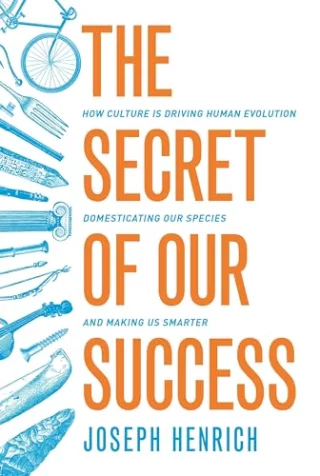
Cooperation is powerful. There aren’t many highly cooperative species—but they nearly cover the planet. Ants alone account for a quarter of all animal matter. Yet the human capacity to work together leaves every other species standing. We organize ourselves into communities of hundreds of millions of individuals, inhabit every continent, and send people into space. Human beings are nature’s greatest team players. And the truly astounding thing is, we only started our steep climb to the top of the rankings—overtaking wasps, bees, termites and ants—in the last 10,000 years. Genetic evolution can’t explain this anomaly. Something else is going on. How did we become the ultra social animal? In his latest book, the evolutionary scientist Peter Turchin (War and Peace and War) solves the puzzle using some astonishing results in the new science of Cultural Evolution. The story of humanity, from the first scattered bands of Homo sapiens right through to the greatest empires in history, turns out to be driven by a remorseless logic. Our apparently miraculous powers of cooperation were forged in the fires of war. Only conflict, escalating in scale and severity, can explain the extraordinary shifts in human society—and society is the greatest military technology of all. Seen through the eyes of Cultural Evolution, human history reveals a strange, paradoxical pattern. Early humans were much more egalitarian than other primates, ruthlessly eliminating any upstart who wanted to become alpha male. But if human nature favors equality, how did the blood-soaked god kings of antiquity ever manage to claim their thrones? And how, over the course of thousands of years, did they vanish from the earth, swept away by a reborn spirit of human equality? Why is the story of human justice a chronicle of millennia-long reversals? Once again, the science points to just one explanation: war created the terrible majesty of kingship, and war obliterated it. Is endless war, then, our fate? Or might society one day evolve beyond it? There’s only one way to answer that question. Follow Turchin on an epic journey through time, and discover something that generations of historians thought impossible: the hidden laws of history itself.
Ce qu'en disent les invités
« En gros, lui, il aborde un aspect un peu parallèle, mais aussi qui est très intéressant et qui est de dire, c'est aussi le contexte qui fait qu'on est capable ou pas de faire les choses. Et lui, il explique que si l'espèce humaine est une espèce culturelle, et très sociale, c'est aussi parce que c'est une espèce qui s'est fait massivement la guerre. Et parce qu'on se faisait massivement la guerre, les groupes humains ont été sélectionnés par leur capacité à se coordonner pour arriver à gagner sur l'autre. Et en fait, c'est aussi une note, moi je trouve, d'espérance quelque part, parce que je pense que dans les conditions très très dures qui vont être les nôtres, on va être forcés à être capables de faire des choses qu'on n'aurait jamais été capables sans ces conditions très très dures qu'on va avoir. En tout cas, ça va faire émerger de nous des choses auxquelles, alors potentiellement très mauvaises, et c'est pour ça qu'il faut se battre pour que ce soit plutôt qu'on sorte par le haut de cette crise. »
Recommandé par
Mentionné dans
Cité dans le même épisode
Les autres livres recommandés dans « Jean-Lou Fouquet - La bataille des flux : comment l’information structure nos esprits, et nos sociétés ? » (Sismique).
Les nouveaux livres, une fois par semaine
Un e-mail avec les livres ajoutés sur le site, et qui les a recommandés. Rien d'autre.